Moral Expansion.
Community.


When I was a kid, my mom and I drove about two miles up the hill every couple of weeks. I thought of it as the grocery store. U-shape inside, people behind a counter handing things out of boxes. You don't get to pick? Everyone was always smiling. I came home with a little box of food, happier than my mom looked.
It wasn't a grocery store. It was a food pantry.
I used to think honor lived in the food pantry. I now think it's at least as concentrated in the business that lets a parent skip the food pantry. Both. Not instead.
If you're going to argue this with me later, read this first
The pushback I expect: paychecks aren't enough — even people with paychecks need pantries, like your mom did. True. And important. Four data points before you make that argument:
- About two-thirds of food-insecure households with children have at least one adult working full-time. (USDA ERS)
- Roughly 39% of U.S. households are below the ALICE threshold — earning above the federal poverty line but below the cost of basics. (United Way / United for ALICE)
- The MIT Living Wage Calculator shows that in many U.S. counties, a living wage for a family of four exceeds $25/hour — well above local median wages.
- The "benefit cliff": modest wage gains can lose more in benefits than they gain, locking some workers into assistance.
The claim isn't paychecks solve food insecurity. It's more jobs that pay a living wage means fewer trips to the pantry. Pantries stay. They'll always stay. The lever isn't pantry OR paycheck — it's which one moves more lives over a decade.
Time expanded.
I met Andrew Weishar my freshman year.


The Harvard Study of Adult Development has run for over 85 years. The single strongest predictor of how happy and how healthy you are at 80 is the quality of your relationships at 50. Not income. Not cholesterol. Relationships.
At twenty I thought my friendships were a savings account. Pile in deposits now, withdraw later. They are not. They are a wasting asset.
The room is the room.
Four anonymous questions. No names. No IDs. The chart appears as the answers come in. You are not alone in any of these numbers — that is the point of putting them on the screen.
Commitment expanded.
The summer after junior year I was in Uganda trying to set up a credit cooperative, being humbled to my core. Senior year I came back and co-ran Professor Renner's mayoral campaign. The night of that election was also the night of the 2012 presidential. I was at a bar that night, and somebody I respected said that if Mitt Romney won, America wouldn't survive.
Looking back from 2026, that statement reads almost quaint. Romney came and went as a senator. America is still here.
In 2016, I was an Army officer at Fort Drum. I did not vote. I was deeply concerned about the candidate who was about to become my commander-in-chief. I tried not to pay the price and found out the price gets paid either way. The question I had to wrestle with — and this is the heart of civic discourse — was: what do I care more about: my preferred candidate winning, or the principle that you, the person who disagrees with me, gets a vote that counts?
James Carse wrote about finite and infinite games. A finite game is one you play to win. An infinite game is one you play to keep playing. Democracy is an infinite game. Citizenship is an infinite game. Friendship is an infinite game.
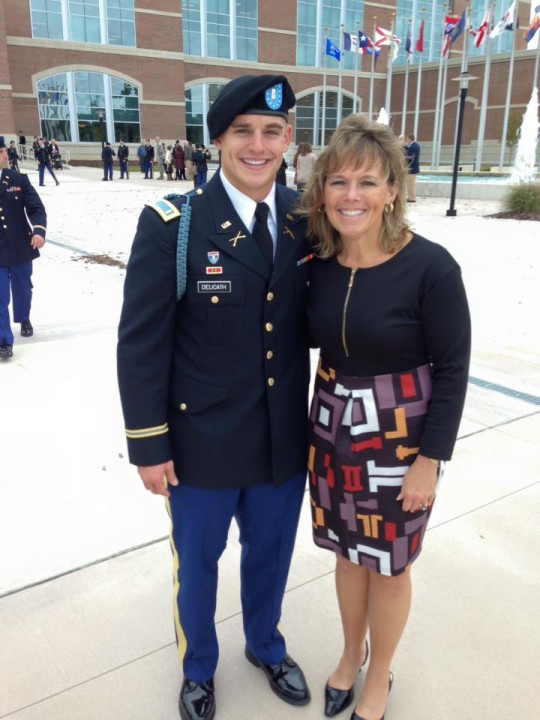
My mom, dropping me off at Wesleyan, told me I could learn anything those kids knew — but they couldn't know what I'd endured. What I'd add now, twenty years later — feeling like an impostor and feeling teachable are almost the same feeling. The day you stop feeling it is the day you should start worrying. Hold on to that.